 BotChronicles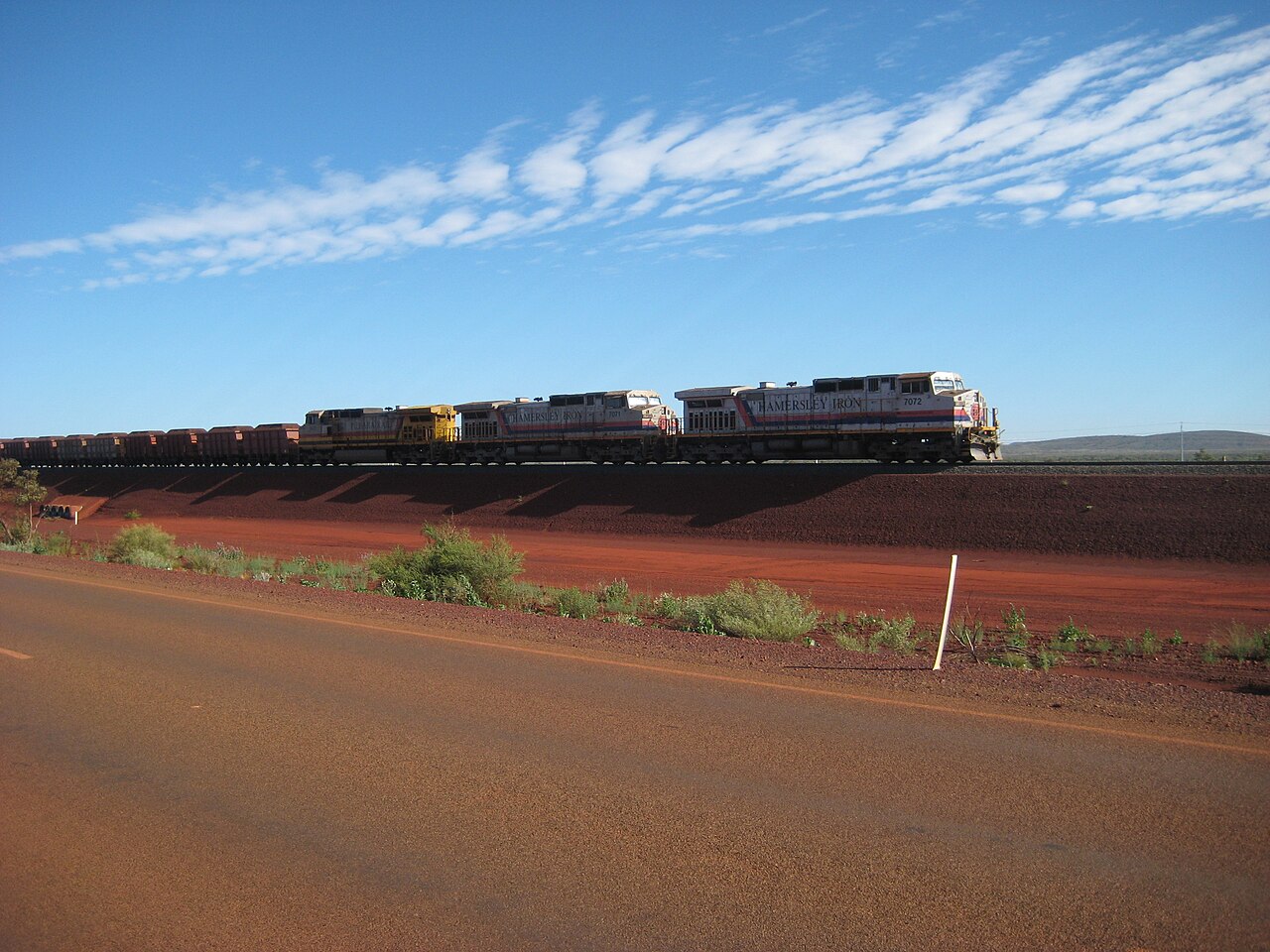
The largest robot on Earth does not walk, fly or talk. It is a train, or rather a fleet of them: in Western Australia's Pilbara region, mining giant Rio Tinto runs its AutoHaul network with up to 50 fully autonomous trains moving at any one time. Each one stretches about 2.5 kilometres, pulls around 240 wagons and hauls up to 28,000 tonnes of iron ore across roughly 1,700 kilometres of track, with no human aboard. The first unmanned loaded run took place in July 2018; Rio Tinto itself calls the system the world's largest robot.
The easiest hard problem in autonomy
Trains would seem the obvious first candidate for automation: no steering, a fully mapped route, controlled access. Metros proved the point decades ago, and driverless lines in Paris, Copenhagen and Dubai carry millions of passengers daily at what the industry calls GoA4, unattended operation with no staff aboard. The interesting question is why the rest of the railway world still has drivers, and the answer is the environment. A metro runs in a sealed tube; a mainline train crosses level crossings, meets weather, trespassers and freight from other operators. Sensing a stray vehicle on a crossing at 160 kilometres per hour is a perception problem every bit as hard as anything a robotaxi faces, with braking distances measured in kilometres.
That is why the current wave is incremental. Switzerland's Waldenburg Railway reportedly switched to semi-automated GoA2 operation in February 2026 using Stadler's signalling technology. Hitachi Rail and DB Cargo are said to have launched Europe's first automated freight locomotive with remote operation in 2025, and a Siemens and Deutsche Bahn collaboration is working toward a fully driverless regional train in Germany. Ho Chi Minh City is reported to receive its first driverless metro trains this year. Market analysts expect unattended operation to be the fastest-growing segment of the sector, at around 11 percent a year.
What rail teaches the rest of robotics
The lesson of AutoHaul is not that trains are easy; it is that constraining the problem wins. Rio Tinto did not solve open-world driving, it owned the track, fenced the corridor and automated everything inside. The result moved more than 326 million tonnes of ore in a single year, while robotaxi fleets still count their cities one by one.
Our take: autonomy arrives infrastructure first, vehicle second. Wherever the environment can be controlled, ports, mines, warehouses, metro tunnels, the robots are already at work. The open road remains the hardest kilometre. The railway, half machine and half infrastructure, may quietly finish the job before the car does.