 BotChronicles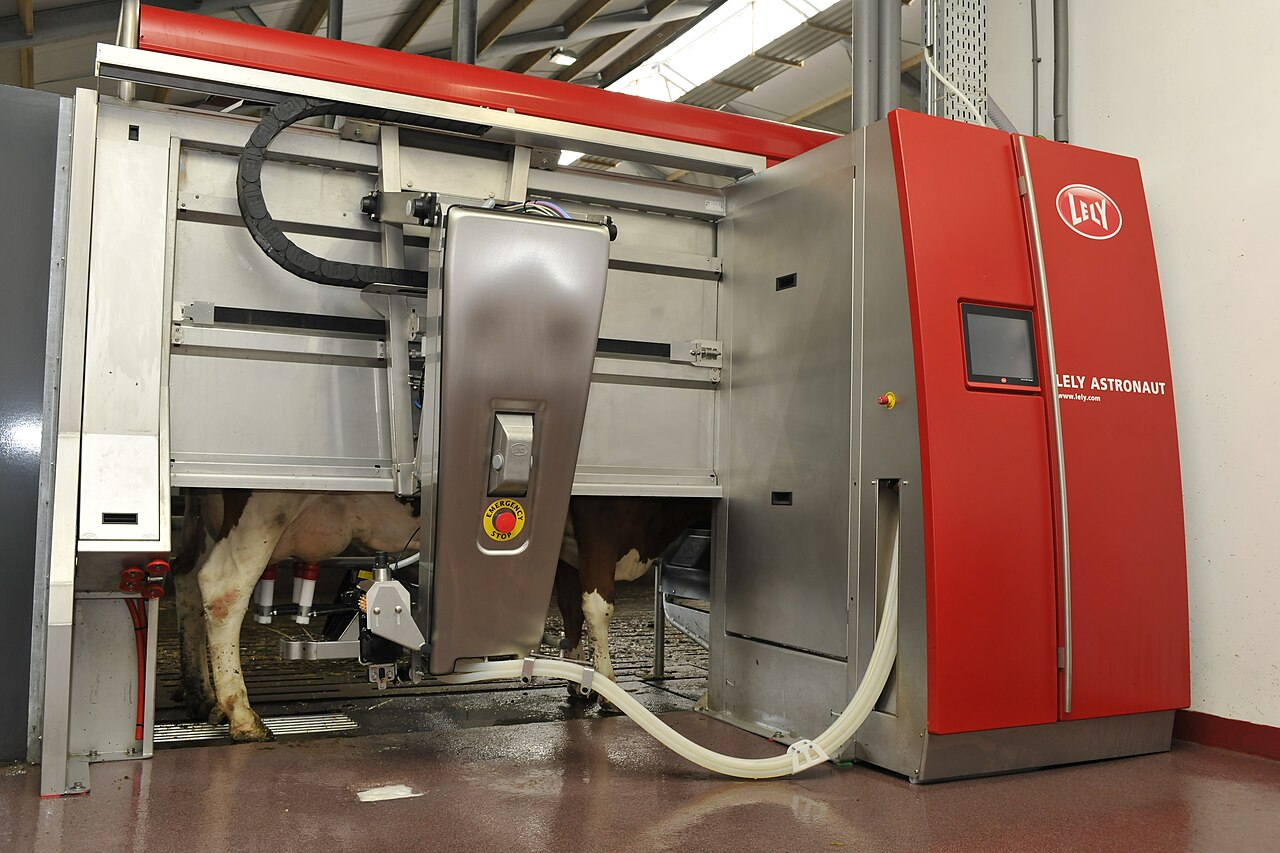
Ask people to name a successful robot and they will say a warehouse arm, a robotaxi, maybe a humanoid demo. Almost nobody says the milking robot. Yet by 2024 more than 38,000 robotic milking units were reported to be operating on farms worldwide, up from 27,000 in 2019, making dairy barns one of the densest robot workplaces on Earth. And the technology is built around an idea that sounds almost radical: let the cow decide.
Voluntary milking, laser included
In a conventional parlour, the farmer milks the herd twice a day on a fixed schedule. In a robotic barn, cows walk to the machine whenever they feel the need, lured by a portion of concentrate feed. The robot identifies the animal, checks how long it has been since her last visit, cleans the teats with rotating brushes and attaches the cups using laser-guided teat detection. Dutch manufacturer Lely, which pioneered the concept with its Astronaut robot in the early 1990s, says the principle is that the cow, not the farmer, controls the milking. Cows typically choose to be milked three or more times a day, which manufacturers and researchers associate with better udder health and higher yields.
Every visit also doubles as a health check. The machines log milk conductivity, temperature, yield per quarter and visit patterns, flagging early signs of mastitis or lameness long before a human would notice. The robot is, in effect, a full-time herd nurse with perfect records.
The economics finally add up
For years robotic milking was dismissed as a lifestyle purchase for wealthy farms. The data now says otherwise. A study by the US Department of Agriculture reports that robotic milking increases American dairy farmers' net returns by 13 percent on average, with automated farms recording labour cost reductions of nearly 28 percent compared to conventional systems. Adoption is strongest where the labour squeeze bites hardest: by 2021, 13 percent of US midsized farms with 150 to 499 cows had gone robotic, and more than 3,200 American farms now reportedly use the systems. Market analysts project the global sector, valued around 2.8 billion dollars in 2026, to more than double by 2035.
The pattern is worth noting for the rest of the robotics industry. Milking robots succeeded without hype: no keynote demos, no viral videos, just a machine that solved a brutal labour problem, paid for itself and treated the animal better in the process. While humanoid startups chase generality, the milking robot mastered one job completely. Twelve thousand new units in five years suggest that, in robotics as in farming, patience pays.