 BotChronicles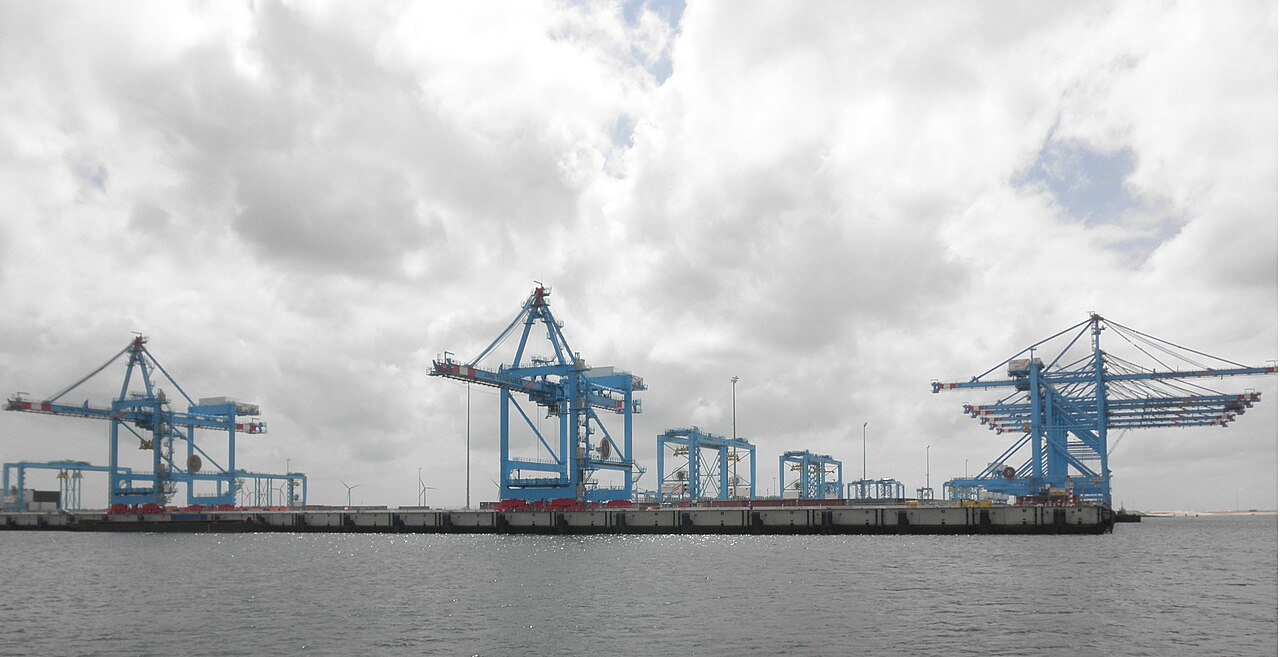
If you want to see the future of logistics robotics, do not look at a warehouse demo. Look at a container terminal at three in the morning: rail-mounted gantry cranes lifting boxes without an operator in the cab, automated guided vehicles gliding between the quay and the stacks, and a handful of humans supervising from a control room. The container port is where heavy robotics went industrial first, and in 2026 it is also where the fight over automation is at its sharpest.
Thirty-three years of driverless docks
Port automation is not new. Rotterdam's ECT Delta terminal began running automated stacking cranes and driverless AGVs back in 1993. Today the model has spread from Hamburg to Qingdao: at Container Terminal Burchardkai, sixteen automated rail-mounted gantry cranes are reported to be operational by early 2026, and Hamburg's Altenwerder terminal is said to run with roughly 40 percent fewer dockworkers than a conventional facility of similar capacity. Industry analyses report that fully integrated terminals, where cranes, vehicles and gates work as one system, can lift throughput by 25 to 35 percent, while new electric cranes cut emissions to meet tightening rules in Europe and Asia.
The efficiency numbers explain the enthusiasm. The employment numbers explain the resistance. Studies of automated terminals report labour reductions of 40 to 50 percent at TraPac in Los Angeles, around 50 percent at Patrick's terminal in Sydney, and up to 85 percent at Qingdao's automated facility.
America hits pause until 2030
Those figures were at the heart of the most consequential labour battle in recent US history. In October 2024, the International Longshoremen's Association staged its first coastwide strike since 1977, shutting 36 East Coast and Gulf ports for three days, with automation as the central grievance. The deal ratified in February 2025 gave workers a wage increase of about 62 percent over six years and froze the deployment of new semi-automated and fully automated equipment through September 2030, outside a narrow list of sites already using it.
The result is a remarkable natural experiment. For the rest of this decade, American Atlantic ports will run on human muscle and older machinery while Rotterdam, Singapore, Shanghai and Qingdao push deeper into robotics. Shippers will route cargo accordingly, and economists will finally get clean data on what automation is really worth.
Our take: the freeze is understandable as social policy and risky as industrial strategy. Robots do not negotiate, but neither do trade flows. By 2030, the gap between automated and manual ports will be measured, public and very hard to ignore.