 BotChronicles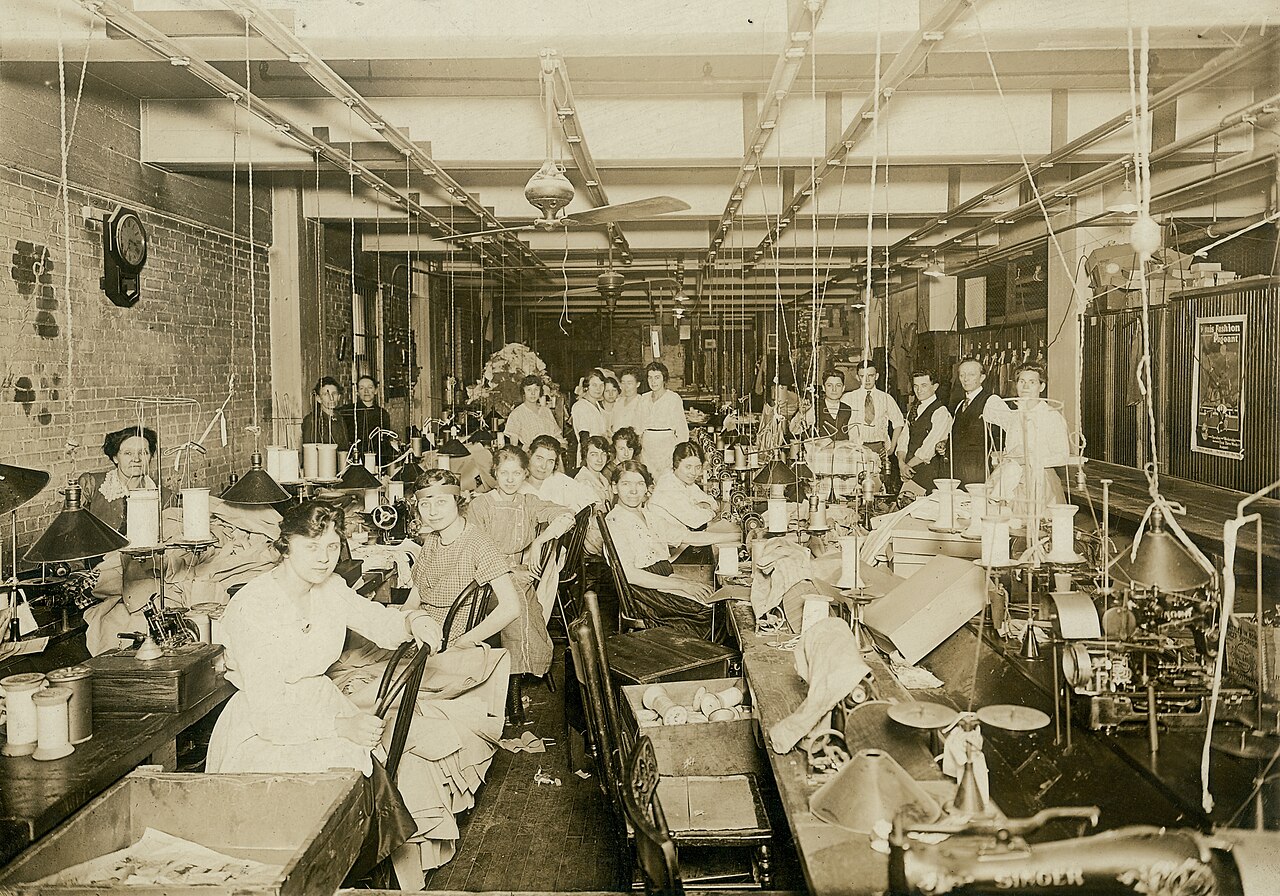
Your car was welded by robots. Your parcel was sorted by robots. Your T-shirt, almost certainly, was sewn by a person hunched over a machine, guiding fabric with fingertips, exactly as it was done a century ago. The garment industry, worth an estimated one trillion dollars, has an automation penetration of just 15 to 20 percent, compared with more than 80 percent in automotive assembly. Sewing is, quite literally, the last frontier of industrial robotics.
Why fabric beats the machines
The reason is physics, not lack of trying. Rigid parts stay where you put them; cloth does not. Robotics researchers describe fabric as a nightmare of high-dimensional dynamics: it stretches, wrinkles, folds onto itself and hides its own grasp points through self-occlusion. A recent review of robotic cloth manipulation in the Annual Review of Control, Robotics, and Autonomous Systems concludes that few methods are mature enough for practical use. A human seamstress solves all of this instinctively, adjusting tension a dozen times per seam. Teaching a robot that skill has humbled engineers for decades.
Two approaches are finally making progress. Atlanta-based SoftWear Automation uses high-speed cameras that map fabric distortion in real time, letting its sewbots steer cloth through the needle like a self-driving car reads the road; the company reportedly raised 20 million dollars in a round led by Danish fashion group Bestseller and produces T-shirts, the simplest garment, first. Rival approach Sewbo sidesteps the problem entirely by temporarily stiffening fabric with a water-soluble polymer, sewing it like sheet metal, then washing the stiffener out.
A trillion dollars looking for a home
The stakes go far beyond factory novelty. Clothing production chased cheap labour from continent to continent for fifty years. Automation breaks that logic: if a sewbot costs the same in Ohio as in Dhaka, production can move next to the customer, and analysts note that localised manufacturing could cut shipping distances for Western markets by 80 to 90 percent, with matching cuts in emissions and lead times. On-demand production would also attack fashion's overproduction problem at the source.
The social equation is harsher. Tens of millions of people, mostly women in South and Southeast Asia, sew for a living, and their jobs sit directly in the path of this technology. The transition will be slower than the hype suggests, T-shirts are not tailored jackets, but the direction is set.
Our take: watch the sewbot the way you watch the humanoid. The robot that masters a deformable object as unruly as cloth will have learned something profound about manipulation itself, and the industry it transforms first employs more people than any other in manufacturing.