 BotChronicles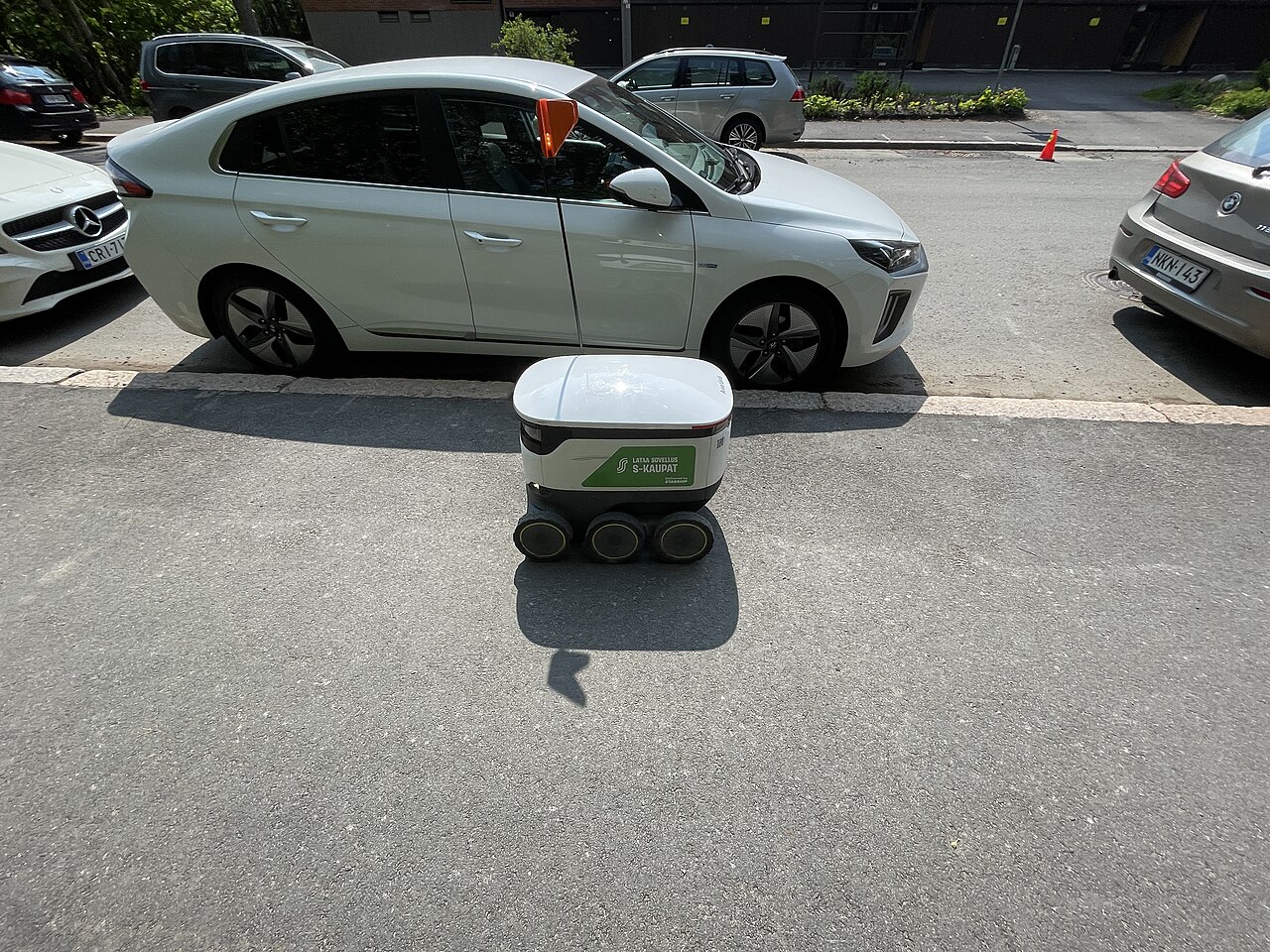
In the race to automate transport, cars soak up the attention. Yet the first autonomy business to reach everyday scale may be rolling along at walking pace. In late April, Starship Technologies reported passing ten million autonomous deliveries, completed across more than 300 locations in eight countries by a fleet of over 3,000 sidewalk robots. The company says its robots now make around 125,000 road crossings per day at Level 4 autonomy, meaning no human is actively supervising each trip.
The economics are starting to look like a business rather than a science project. Starship reports that a robot delivery already costs 3 to 4 dollars less than a courier-based one, with a long-term target of about one dollar per drop. Research by Barclays, as reported by Reuters, put the global profit pool that autonomous delivery could unlock at around 16 billion dollars a year.
America's sidewalk turf war
In the United States, the competition has become a genuine turf war. Serve Robotics, which spun out of Uber's Postmates unit, built its 2,000th robot this year and claims the largest sidewalk delivery fleet in the country. Its cheerful, googly-eyed couriers started in Los Angeles and now operate in Miami, Dallas-Fort Worth, Atlanta, Chicago, Fort Lauderdale and Alexandria, Virginia, taking orders through both Uber Eats and DoorDash. Since March they even carry White Castle burgers.
DoorDash, meanwhile, decided to build its own machine. Dot is a bright red robot about three feet wide that can use bike lanes and roads as well as sidewalks, travels at up to 20 mph and hauls 30 pounds of food, roughly six pizza boxes. After an early-access launch in the Phoenix suburbs of Tempe and Mesa, Dot reached Fremont, California in March, and DoorDash says it aims to cover a Phoenix-area population of 1.5 million by the end of 2026. The platforms are no longer just buying robot capacity; they are becoming robot makers.
Why the sidewalk scales faster than the road
The logic is straightforward. A 50-kilogram robot moving at jogging speed poses a fraction of the risk of a two-tonne robotaxi, so permits are municipal rather than federal, insurance is cheaper, and a remote operator can rescue a confused robot without endangering anyone. Food delivery is also the perfect constrained problem: short, repetitive, well-mapped routes with forgiving cargo.
The open questions are civic rather than technical. Sidewalks are shared space, and advocates for wheelchair users and blind pedestrians warn about clutter and blocked paths; some cities have capped permits before. Gig couriers, whose income these robots directly replace, have concerns of their own. But after ten million deliveries, one conclusion seems safe: the robot that changes your daily life may never drive you anywhere. It will bring your dinner instead.