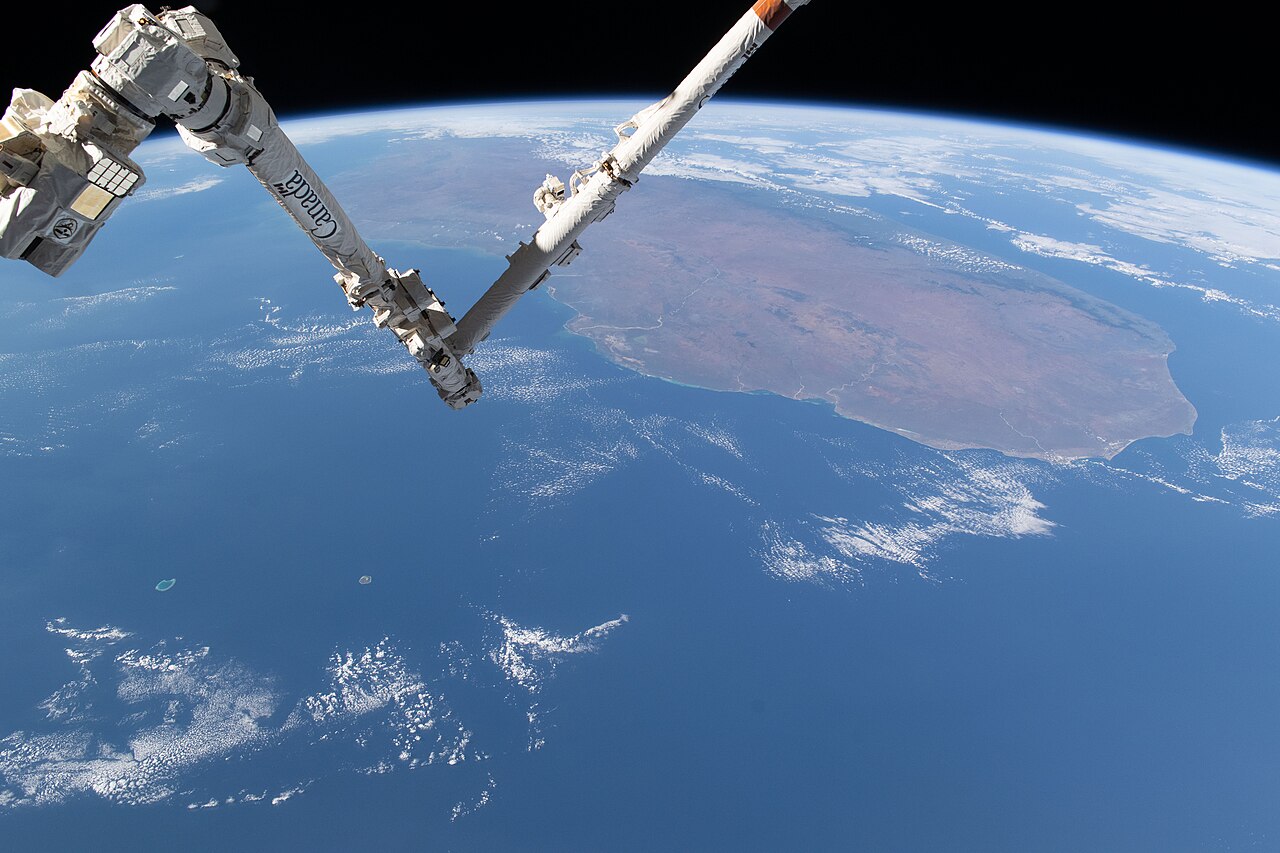
For decades the rule in space has been brutally simple: when a satellite runs out of fuel or something breaks, it dies. There are no mechanics in orbit, no spare parts, no tow trucks. A spacecraft worth hundreds of millions of dollars can be retired just because a thruster ran dry or a hinge jammed. In 2026, that rule is finally starting to bend.
Four missions, one big bet
According to Air & Space Forces Magazine, the United States plans four separate on-orbit servicing missions this year, all aimed at geosynchronous orbit (GEO) — the ring some 22,000 miles (about 35,800 km) above the equator where the most valuable communications satellites live. The headline act is DARPA's long-delayed Robotic Servicing of Geosynchronous Satellites (RSGS) program, which the agency said on 20 May is ready to launch as soon as this summer, as reported by Space.com.
RSGS centres on a "highly dexterous robotic servicing suite" — essentially a pair of jointed robot arms, built with the U.S. Naval Research Laboratory, bolted to a SpaceLogistics (Northrop Grumman) spacecraft. Once it reaches GEO after a roughly ten-month electric-propulsion cruise, the vehicle is meant to inspect ailing satellites, nudge them into better positions, resolve anomalies and even install upgrade "pods." DARPA's program manager, James Shoemaker, told Air & Space Forces that something unexpectedly goes wrong with a GEO satellite about three times a year — a solar array that only half-deploys, an antenna that sticks — and that a close robotic inspection makes those problems far easier to solve.
The other three American efforts — Astroscale's refueller, the Tetra-5 demonstration and the Defense Innovation Unit's Kamino — focus on the harder trick of pumping fresh propellant into satellites that were never designed to be refuelled.
From disposable to maintainable
The economics explain the sudden urgency. A SpaceLogistics executive told Air & Space Forces that 10 to 20 GEO satellites reach end of life every year purely because they run out of fuel, even though the hardware still works. Industry advocates compare the coming model to a petrol station: you buy the fuel you need rather than building your own infrastructure. Europe is moving the same way, with engineers developing what Euronews called "orbiting breakdown trucks" to service and refuel hardware in place.
None of this is guaranteed. RSGS was first announced in 2017 and has slipped for years; its original contractor walked away, and even now operations would not begin until 2027. But the shift in mindset is real. If 2026 delivers, the satellite stops being a disposable object and becomes something you can refuel, repair and upgrade — a quiet but profound change in how we treat the increasingly crowded space above our heads.