 BotChronicles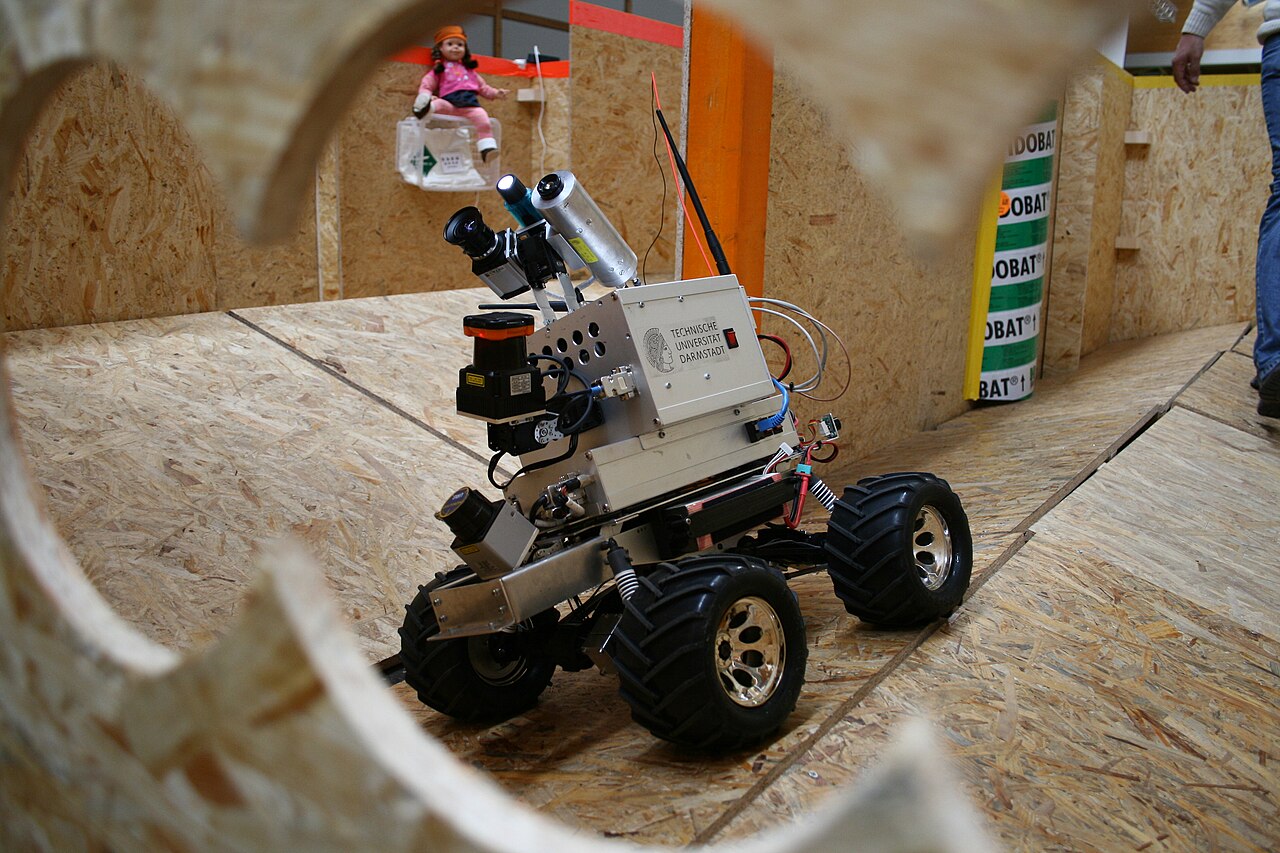
When a building collapses, the cruelest enemy is the clock. Survivors trapped in the voids between slabs of concrete may last only hours, yet sending humans or dogs into a shifting ruin can cost more lives than it saves. For two decades, robots have promised to break that trade-off. In 2025 and 2026, several of them finally look ready for the job.
Soft robots for hard places
The most striking newcomer is almost gentle. SPROUT — the Soft Pathfinding Robotic Observation Unit, built by MIT's Lincoln Laboratory with the University of Notre Dame — is a "vine robot": an airtight fabric tube that grows by inflating, unfurling from its base to thread through gaps a rigid machine could never enter. As it extends, it flexes around corners, squeezes through tight paths and carries a camera to map the void and find ingress routes. The team has tested it with Massachusetts Task Force 1 responders, reportedly refining how to steer and grow it under real rubble.
It joins an older lineage. Carnegie Mellon's snake robot, with its dozen-plus articulated joints, was sent into the debris of the 2017 Mexico City earthquake — an early proof that a machine could slither where a hand could not. Where snakes and vines reach, four legs now follow: Unitree demonstrated a quadruped fire-and-rescue robot in 2025 that can climb stairs and pick its way through collapsed, multi-storey structures, while DEEP Robotics markets its X30 "dog" for toxic, unstable hazard zones.
From joystick to judgement
The quieter revolution is autonomy. Most rescue robots are still teleoperated — a skilled human on a joystick, watching a screen. That breaks down exactly when it matters: in smoke, dust and dead radio links. This is the gap the U.S. DARPA Triage Challenge has been pushing on. By its September 2025 events, teams were made to operate in deliberately degraded conditions — low light, smoke, physical obstruction — and to have their robots not just find people but begin assessing injuries, the way the University of Maryland's RoboScout is designed to.
None of this replaces the firefighter or the rescue dog, and the field has a habit of over-promising. But the direction is clear. A robot that can be sent into a void without risking a second life, map it in 3D, and flag where a human is breathing is no longer science fiction — it is field-tested hardware. When the next walls come down, some of the first responders through the gap may have no pulse of their own.